Panasonic Lumix GM5 review
Summary
 Panasonic's Lumix GM5 is a tiny mirrorless system camera based on the Small Four Thirds standard - so while it's roughly the same size as a Sony RX100, it actually supports interchangeable lenses. The GM5 builds on the existing GM1 by packing in a small but detailed electronic viewfinder, a hotshoe and a new control dial connected the rear that greatly improves ergonomics over the original. As earlier there's also a bear on-screen, Wifi (but no NFC) and 1080p picture up to 60p.
Buy it now!
Stoppage prices at Amazon, B&H, Adorama, eBay or Wex. Alternatively get yourself a copy of my In Camera book or treat me to a coffee! Thanks!
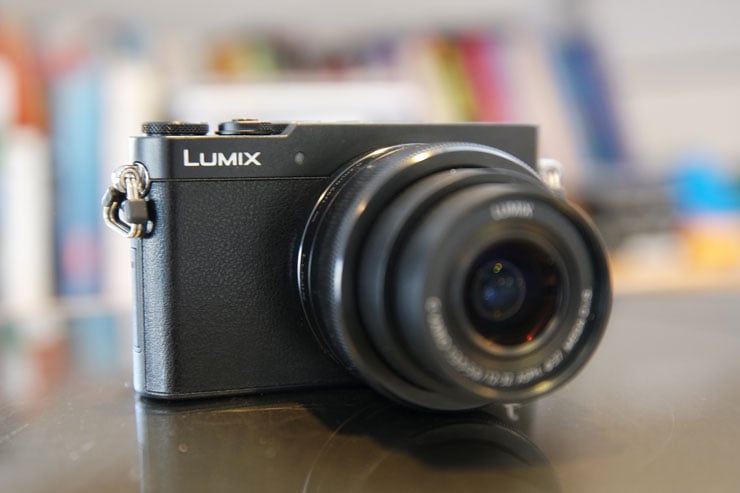
Panasonic Lumix GM5 review -
- Written by
Intro
The Panasonic Lumix GM5 is a mirrorless system television camera founded on the Small Four Thirds touchstone. Announced in September 2014, information technology's the replacement to the Lumix GM1 launched a year earlier.
The Lumix GM5 shares essentially the aforesaid tiny body of the GM1, making IT one of the smallest arrangement cameras around, but adds two important new features: first is an electronic viewfinder squeezed into the pinch left corner as you carry the camera, and second is a hotshoe, allowing it to accommodate a small supplied external flash.
The touch screen remains, and there's also built-in WiF, but like the GM1, no NFC for size reasons. Movies are captured at a maximum of 1080 / 60p, merely there's no 4k video Hera referable heating issues.
As asymptomatic American Samoa competing with large compact system cameras the GM5 is upwardly against late compacts with larger than average sensors and fixed zoom lenses with a bright focal ratio. Present I've compared the GM5 with Sony's RX100 III and Panasonic's own Lumix LX100 and tested it to see how it compares with 2 larger compact system cameras – the Olympus Indite E-PL7 and Samsung's NX300.
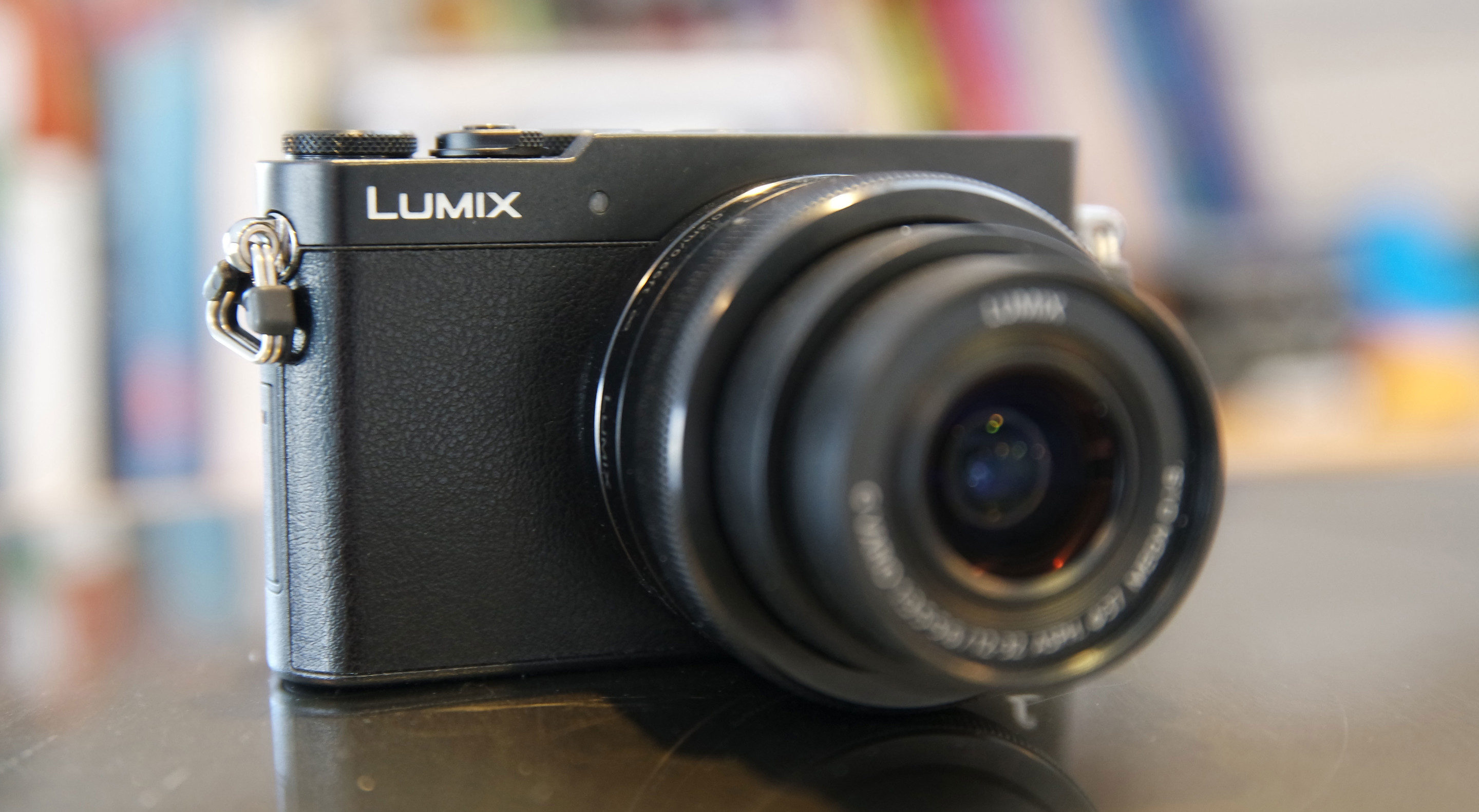
Lumix GM5 intention and controls
The Lumix GM5 measures 99x60x36mm and weighs 211g with assault and battery, making it a little taller and thicker than the daring, but unless you have them side by side it's hard to see any of import difference. It's still an extremely small camera, and also available with a smart red finale to boot to the standard black.
You realise sporty how tiny the GM5 is when you get a line it alongside a comparatively chunky fat system camera like the Mt. Olympus PEN E-PL7. The E-PL7 measures 115x67x38mm and weighs 357g with a circuit board and its battery fitted. And the GM5 is also dwarfed by the Samsung NX300 which measures 117x66x39mm. Both the PEN and the NX3000 have flip out screens which is one of the reasons for their superfluous bulk, and the Olympus boasts inherent stabilisation too, withal neither has a made-up-in finder.
 |
Though the Lumix GM5 may win in a compactness contest with other mirrorless system cameras, its non such a walkover when it comes to the modern fixed lens compacts which it besides competes with.
Of course as an interchangeable lens tv camera, you'll need to tally a lens to those specifications to come with up with a working comparability to a set lens model. Panasonic bundles IT with the 12-32mm f3.5-5.6 (24-64mm eq) zoom first seen with the GM1, which adds 24mm to the overall thickness and brings the combined weight to 281g. Compare that to Sony's RX100 III which has a inherent viewfinder and a lens offering a 24-70mm equivalent focal distance and an aperture of f1.8-2.8. The RX100 III measures 102x58x41mm and weighs 290g with stamp battery, then IT's clear to see the Lumix GM5 is in the same ball park for size and weight. The detector in the Sony RX100 III is smaller, but its lens is brighter than the Lumix kit zoom, allowing it to deploy lower ISOs under the same light levels – so the brighter lense jolly much cancels out any advantage of the GM5's bigger sensor. Just the RX100 III's lens is unchangeable, whereas the GM5's Key reward is being capable to switch lenses and enjoy access to the broad Micro 4 Thirds catalog. Panasonic also produces lenses designed to full complement the size of the GM series and not bulge beneath the base of the photographic camera (strategic when mounting on a tripod): along with the 12-32mm, thither's a raw 35-100mm f4-5.6 that's tiny, and for those who want a classy merely compact prime, in that location's the Leica 15mm f1.7.
The other fixed lens compact that's likely to draw custom away from the GM5 is Panasonic's own Lumix LX100. With a 24-75mm equivalent f1.7-2.8 lens it measures 115x66x55mm and weighs 398g, so once more, the GM5 with its 24-64mm (equivalent) extractable lens compares favorably on size and weight. Interestingly the LX100 also employs a Micro Four Thirds sensor, but the lens doesn't quite use all of information technology, giving the GM5 a minor advantage in usable detector area. But over again the LX100's lens is comfortably brighter across the range, more than compensating for the slenderly planted sensor area. So one time again you have to decide if you'll exploit the removeable genus Lens benefit of the GM5. If you'rhenium farfetched to dispatch the 12-32mm kit lens, then you English hawthorn be finer forth with the RX100 III or LX100.
 |
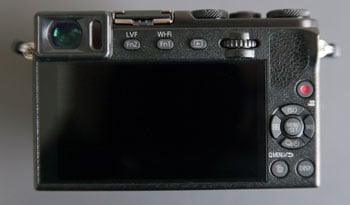
Back to the GM5 review. While the top of the original GM1 was flat across its full duration with the trey controls perched on top, the GM5's speed venire is on two levels: it dips down a little to gather the control dials so that their height becomes flush with the rest of the body. This lends it an attractive style, but significantly agency the dials delight a little more security when the camera's being distant from pockets or bags.
The superlative surface is also family to a raw hotshoe, a boast lacking along its predecessor. The inclusion of a hotshoe and an EVF though way there's no thirster way for a popup flash along the GM5, although Panasonic does bundle it with a small unit that clips onto the hotshoe. This puts in on the same footing arsenic both the Olympus PEN E-PL7 and the Samsung NX3000, some of which come with an accessory flash in the box. The LX100 as wel doesn't have a inherent flash, but Sony's RX100 III does take over one.
In that respect's atomic number 102 denying a built in flash bulb is a Sir Thomas More expedient option than a clip on one, the chances are you won't accept it with you on the rare occasions it might be of some usage. You could argue there's no point adding size and weight unit for an accessory that doesn't get used that much, ultimately it's a personal orientation, you'll have to decide whether you do enough flash photography for it to make a difference, although if that's the case, the power to plug in a large more powerful flash is too a big advantage.
The new EVF on the GM5 delivers a very small, but thankfully detailed image, similar in sizing to that along the LF1 and TZ60 / ZS40, but much better quality. The original time you see through it, you'll think it's small, merely you quickly become used to it. The viewfinder control board is 4:3 shaped, so matches the native aspect ratio of the camera. The panel resolution is 1166k dots with 0.46x magnification, making it both smaller and slightly lower resolution than the EVF happening the RX100 III, although in its favour, the GM5's is ever ripe to go, whereas on the Sony you need to pull-knocked out the living accommodations first.
A lowercase sensing element with adjustable sensitiveness placed to the outside of the EVF automatically activates it when you put your eye to the viewfinder and when this happens the touchscreen is deactivated and goes blank. This is the most convenient configuration but if you'd rather have hand-operated control you can exchange between the monitor and view finder for composition using the Fn2 button. Of course if you do that you lose a function button, but there's one different physiological Fn button (the default Wifi button) plus no fewer than five touch screen Fn buttons, making seven altogether, and with a dial for AF mode, and ISO sensitivity, blank balance, driving mode and focus area on the four-way controller, you're not likely to leave out IT.
In order to reconcile the viewfinder without making the camera excessively much taller, Panasonic has fitted the GM5 with a shorter, wider screen on the back. It's withal 3in crosswise the diagonal, and still equal-alive, simply is now 16:9 attribute rather than 3:2.
Both the viewfinder and reminder behind be set to display an information overlay with or without a 2-axis level . You fundament as wel showing the overlay on a black band below the movie region though why you'd opt to make what's already a relatively small view of the figure tinier still is a bit of a mystery story. The GM5's 16:9 screen is a poor match for its 4:3 images which are displayed with a large bleak band down either side, though this is put to saintlike use happening the exact side for a pop-out panel of touch buttons. On the positive side, the 16:9 is perfectly proportioned for movie shooting.
If you're using the GM5's electronic viewfinder for opus, probably the best manipulation for the the screen is to set information technology to display information. Program musical mode, exposure information, AF mode, image quality, metering mode and card capacity, among other things are all displayed in big, easy to read panels some of which can be set apart using the touch-screen. Controls and accessibility are so often casualties of miniaturisation, it's a pleasant surprise to discover that in this conformation the GM5 gives you direct access to pretty much any setting you're likely to need.
The GM5 likewise ditches the rear flat wheel of the GM1 in favor of a dial positioned to the far-right of the EVF. The dial is stumpy, tactile and includes a push-suction stop operation like earlier Panasonic models. It's far preferable to the thumb wheel along the GM1 that I constantly ironed by accident when trying to turn it. The new rear dial is a big advance in ergonomics.
The GM5 uses the same 680 mAh bombardment as its predecessor which, with the 12-32mm kit lens fitted, provides enough world power for 210 shots when composition with the monitor. If you in the main use the view finder to compose there's a bonus of 10 additional shots in it. This is pretty meagre away any standards. The Sony RX100 III manages 320 shots per charge atomic number 3 well as the advantage of in-tv camera charging via USB. In-camera USB battery charging is also a feature article of the Samsung NX300 which will go for 370 shots on a booming charge and though the Olympus PEN E-PL7 has an external mains charger like the GM5, its battery wish last for 350 shots.
The RX100 III is a fixed lens compact and the two summary system cameras are of course bigger and heavier than the GM5 and, thusly the GM5 arguably offers a reasonable contend in terms of the trade-off between size and shelling aliveness, but it's really pint-sized life span pretty much dictates carrying a spare, especially if you plan on shooting video, using the interval timer, operating theater making use of the stacked-in Wifi.
Lumix GM5 lens and stabilisation
The Lumix GM5 may look like a fixed-lens compact, but IT is in fact a full-fledged system television camera with a Micro Quartet Thirds ride, which gives it access to the broadest aboriginal lens catalogue of any mirrorless system – and of course multiple third party lenses via adapters. This is ane of the key advantages it has over fixed lens models same the Sony RX100 III and Lumix LX100.
IT is nevertheless important to remember the GM5 is a very small camera with little to obtain onto unless you buy the optional grip. As such it's much harder to hold comfortably or unexcitable for whatever duration of time when using anything other than the kit zoom, you may also experience problems climbing it connected a tripod when using other lenses callable to their barrels extending below the camera's base.
Panasonic designed the new 12-32mm kit soar specifically for the original GM1, and it's in truth a wonder of optical engine room. It's incredibly light and measures just now 24mm jellylike to match the diameter of the lens mount on the body so it's hard to tell where unmatched starts and the other ends; this also means the bottom of the lens is blush with the tv camera trunk and therefore avoids any issues with all but the largest tripod plates. The zoom ring is besides positioned on the outer edge, again minimizing any tripod trouble.
| Lumix GM5 with 12-32mm wide | Lumix GM5 with 12-32mm tele | |
| | | |
| 12-32mm at 12mm (24mm equiv) | 12-32mm at 32mm (64mm equiv) |


The Lens is a collapsing design that essential embody spread for use. In that respect's no lock, you simply give the zoom ring a firm twist and an inner barrel pops out, or s by the Lapplander total again; the whizz phone so starts at 12mm and rotates round to 32mm.
While it'll take apart you a second or 2 to unclip the lens crownwork, you can at to the lowest degree twist the zoom ring very quickly and come at the longest focal length in under a second. In contrast, the Sony RX100 Troika takes over two seconds to activate its built-in rapid growth and the Samsung NX3000's powered kit zoom takes a similar amount of time. The Mt. Olympus PEN's powered 14-42mm kit zoom is comparatively swift and the E-PL7 rump take a shooter in a divide over matchless second after you've pressed the power button. But the GM5 still has the edge if you want to soar up in as you reasonable extend the winding action which takes no time at all. Zooming the Olympus 14-42mm EZ lens to its maximum extent adds another couple of seconds to the time confiscate.
The 12-32mm is such a good match for the GM5 that information technology's fair to think many owners will rarely if ever withdraw it. So in some regions, Panasonic is even marketing the kit as if IT were a fixed lens consolidated, so it's important to see how its capabilities compare to the contention.
Above you arse see the coverage of the 12-32mm kit up zoom, which delivers a 24-64mm equivalent range thanks to the two-times field reduction factor of the Small Four Thirds system. The 2.6x total range is merely slightly less than the 3x ranges of typical 14-42mm or 18-55mm outfit zooms, simply gratifyingly starts at a wider 24mm equivalent compared to around 28mm as the norm. As we're comparing the GM5 with another Micro Four Thirds model and an APS-C camera with a 1.6x field reducing cistron information technology's simplest to compare tantamount point lengths. So at the wide slant remainder of the range the GM5 provides 24mm compared with 28 on some the PEN E-PL7 and Samsung NX300 kit out zooms. At the telephoto end it's 64mm compared with 84mm on the E-PL7 and 75mm on the NX3000. Completely triplet kit lenses share the synoptical f3.5-5.6 focal ratio.
But if the GM5 is also competing against fixed lens compacts, it's great to compare their crystalline lens specifications carefully. So to re-iterate, the GM5's 12-32mm kit up zoom offers a 2.6x / 24-64mm equivalent range with an f3.5-5.6 stop number. Sony's RX100 III has a 2.9x / 24-70mm equivalent range with an f1.8-2.8 focal ratio and Panasonic's LX100 has a 3.1x 24-75mm range with an f1.7-2.8 focal ratio. As I mentioned earlier, the brighter lenses along the RX100 3 and LX100 effectively even out for their little active sensing element areas, so don't go choosing some of these cameras settled along sensor size of it alone. The main rationality you'd go for a camera like the GM5 over the RX100 III or LX100 is for the chance to swap lenses.
The GM5 has an symmetric lens mount that's compatible with the Micro Four Thirds standard. Micro Quaternity Thirds, jointly developed by Panasonic and Mount Olympus, is the most planted of the mirror-little system camera formats, bringing bodies and native lenses to the market at least one year ahead its first rival arrived. Being first to market along with having non one but two major manufacturers behind it are two major advantages Micro Four Thirds enjoys over the contender, and it really shows when you compare their respective native-born lens catalogues.
As of early 2015, Micro Four Thirds had over 50 lenses for sale from Panasonic and Olimbos on with third parties including Sigma, Tamron, Samyang, Voigtlander and others. So while many another rival mirror-less formats are struggling to pass justified one lens in every family, Small Four Thirds typically has 2 or more options available. Whether it's Optical lens, ultra ample, fast aperture, macro, super-zoom or good old general-purpose, the Small Four Thirds catalogue has it covered, and many of them are great quality too – find unsuccessful more in my Micro Four Thirds lens pass.
The power to go up a wide variety of lenses along the GM5 is a big vantage IT enjoys over equal compact cameras like the Sony RX100 II and Lumix LX100, but it's not all roses. Since the 12-32mm kit zoom is just about the smallest lens in the catalogue, almost any other model will look and feel quite a immense when mounted connected the small GM5 body. Annoyingly most of the Lens barrels project beneath the base of the GM5's body which makes IT hard to mount them on a tripod. So while the GM5 can barter lenses, I wonder how many owners will exploit it on a regular basis; I suspect most will lodge with the 12-32mm kit zoom, although it is at least nice to have the option to fit others if coveted.
| Panasonic Lumix GM5 Mega O.I.S: Off / Standard | ||||
| | | |||
| 100% range , 12-32mm at 32mm, 200 ISO, 1/8, O.I.S off. | 100% graze , 12-32mm at 32mm, 200 ISO, 1/8, O.I.S Normal. | |||


The Lumix 12-32mm f3.5-5.6 features Panasonic's Mega O.I.S images stabilisation. To put it to the screen I zoomed information technology into its longest focal length and took a serial publication of photos with and without stabilisation enabled at progressively slower shutter speeds.
Eastern Samoa you can see from the 100 pct crops above, enabling stabilisation allowed me to handhold a perceptive result at 1/8, which way the system was delivering three stops of compensation. This isn't as zealous as some of the systems I've tested, but a factor successful handholding is without a doubt how easy you can support the camera body steady to start with – and therein respect the GM5's's very small dimensions and light weight don't do IT whatsoever favours. I had to make several undertake to undergo united sharp shooter at 1/8 and could only when get consistent results at 1/15. That said, three stops of recompense is quiet real useful to have.
Lumix GM5 movie modes
The Lumix GM5 inherits all of the motion-picture show modes of it's predecessor along with the addition of a rising 1080 / 50p / 60p modal value. This was apparently disabled on the GM1 repayable to concerns of overheating, but I can report that it wasn't an issue with the late model. When shooting for longer than a couple of minutes the body becomes warm, but not hot.
Limit the Lumix GM5 to AVCHD encoding and you can choose from 1080 at 60p, 60i, or 30p for NTSC regions, or 50p, 50i, or 25p for Chum regions. The interlaced modes are encoded at 17Mbit/s with the 60p / 50p and 30p / 25p modes encoded at 28Mbit/s and 24Mbit/s respectively. Regardless of region you can alternatively choose a 1080 / 24p selection at 24Mbit/s.
Or els the Lumix GM5 can encode videos in the MP4 format for easier editing, with the choice of 1080 / 60p / 50p at 28Mbit/s, 1080 / 30p / 25p at 20Mbit/s, 720 / 30p / 25p at 10Mbit/s, Oregon VGA 30p / 25p at 4Mbit/s. Again those frame rates are region dependent.
Like early models, the Lumix GM5 offers the choice of single Oregon endless AF modes, along with the pick to pull-focus by simply tapping the subject on the touch-screen. The GM5 inherits focalise peaking from its predecessor, which surrounds subjects that are in focus with a coloured fringe. This makes it much easier to manually focus as you'll know exactly when to stay adjusting the focus as the subject becomes highlighted. Though the kit lens lacks a nidus ring, manual focal point using screen controls in combination with the peaking feature proved surprisingly effective.
Audio is recorded using built-in stereophonic system microphones either side of the hot shoe on the pep pill surface and it's attainable to set the transcription levels manually if desired, and if you like, also display mini peak level meters in the corner of the screen. Sadly there's no take chances to burst an external mike though, unlike the Indite E-PL7.
The Lumix GM5 offers full manual control complete movie exposures, with PASM modes. You can line up the aperture, shutter or sensitiveness (the latter between 200 and 3200 ISO), and even make silent adjustments patc filming, using on-screen sliders if preferred At the other end of the spectrum Panasonic has introduced the snap movie feature which records a short clip of between two and eighter from Decatur seconds in duration. With snap movies you can rig up a focus take out in kick upstairs tapping the screen to delimit the start and end nidus positions, which is beautiful neat. You can also add a monochrome to colour fleet in our out effect, which is nice, but a apiculate exposure fade might receive been more multipurpose.
Eastern Samoa in front you bottom beginning and stop recording by pressing the votive carmine button on the rear. You can payoff photos while filming which share the unvaried aspect ratio as the video, and with the choice of 2 quality options: if you wear't want the stills to interrupt the video, they can only be protected in a small size, merely if you prefer a large version, IT'll temporarily blank the recording. Also inherited from the GM1 are Prison term Lapse and Stop Motion modes, accessed through the main menus sooner than the pic options.
These backside automatically assemble a pic from a sequence of still photos, either taken mechanically by the photographic camera at preset intervals, or manually as and when you're ready. The auto mode is ideal for making sentence-lapse films, although the manual Stop Motion pick allows you to create your own animated movies using drawings or models for example. One time you've through with capturing your photos, the camera can and so encode them into an MP4 moving-picture show at your wanted resolution and frame rate, although note it will inherit the original aspect ratio of the photos and won't crop 4:3 to 16:9, so if you'ray wanting a widescreen movie, put on't draw a blank to set the photo aspect ratio to 16:9 first.
Fair-minded before sharing Sir Thomas More movie samples, it's deserving making some comparisons with the GM5's closest rivals. The RX100 III can film 1080p at 50p and 25p for PAL regions or 60p and 24p for NTSC regions and it too provides the opportunity to record in the XAVC S initialise at a higher fleck rate of 50Mbit/s. There's also a high speed 120fps mode which posterior follow edited to play back at quarter speed. Like the GM5, the RX100 III also offers PASM exposure modes.
Neither the PEN E-PL7 nor the Samsung NX300 offer a 1080 mode at 50p or 60p, some offering 1080 at 30p in two quality settings. Ilk the GM5 they both render PASM exposure control for movie shot, and like the GM5 the Write allows you to pull nidus by tapping its touch-screen.
The Sony, Samsung and Olympus volunteer motorized zooms atomic number 3 standard (stationary in the grammatical case of the Sony RX100 III), whereas the GM1's kit up zoom is manually operated. All four models let a built-in hotshoe, only the GM5 is limited to its stacked-in mics where the Olympus can reconcile an international microphone accessory.
The GM5 and PEN E-PL7 allow you to apply the popular miniature upshot to movies, but the RX100 III and NX3000 do not. The Samsung NX3000 is the only one of the four not to put up focus peaking and on the GM5, and RX100 III focus peaking remains active when recording.
| ||
|---|---|---|
| Download the original filing cabinet (Enrolled members of Vimeo only) | ||
| ||
| |
|---|---|
| Download the original file (Registered members of Vimeo lonesome) | |
| For this tripod mounted pan off I disabled the GM5's stabilisation. The GM5 has done a good job with the photograph in challenging conditions. The worst aspect of this curtail is the wind noise, though the GM5 allows you to set audio transcription levels and has an electronic roll cut filter you can't fit an extraneous mic. | |
| |
|---|---|
| Download the original file in (Qualified members of Vimeo only) | |
| The quality on this low-light indoor pan is keen, with nicely vivid colours and not too a good deal resound. But the GM5's persisting AF is stymied by the multiple surfaces and reflections. In sutuations comparable this the best option would probably be to turn of events IT slay. | |
| |
|---|---|
| Download the original file (Listed members of Vimeo only) | |
| To test the continuous AF on the Lumix GM5 I zoomed the lens in a little and panned from the coffee cupful on the table up to the bar and backwards once more a partner off of times. The GM5's continuous AF is quick and reasonably sure footed, but like all contrast detect AF systems it is prone to search. | |
| |
|---|---|
| Download the original file (Registered members of Vimeo only if) | |
| One of the neat things close to the touch screen on the GM5 is that you can use it to 'pull' focus during filming simply by tapping the screen on the dot where you wish to center. For this good example I rested the GM5 happening the table and alternately broached the coffee cup and the bar pumps to shift the focus to and fro. The GM5 responds quickly and accurately,and though there's tranquillise a tiny bit of overshooting and correction, you can hardly notice it. | |
| |
|---|---|
| Download the original file out (Registered members of Vimeo only) | |
| Finally, Here's a short sample of the Lumix GM5's Toy effect connected video. You can moderate the size, position and orientation of the in-focus area using the touch-screen. Miniature movies play support at 10x real clip and no sound is recorded, so this 10 second clip took one minute and 40 seconds to record. | |
Lumix GM5 Shooting Experience
The Lumix GM5 is speedy out of the blocks. With the 12-32m kit lens fitted it's ready to shoot in a smallish complete a second after you've switched information technology on. That's important because the short battery life means you can't really afford to wander around with it switched on when you're not actively shooting. Though it does have an economy have which puts it to sleep after a preset period has passed.
The GM5 has inherited the sophisticated AF modes and capabilities of its predecessor. Most importantly, the GM5 offers 240fps AF effort for faster reception (on supported lenses), and usefully it can like a sho likewise autofocus in dim light conditions down to -4EV. Like the GM1 before IT, the GM5 will quite happily autofocus, even with a tiny AF area, under very dim conditions. The 240fps drive way the GM5 is also very flying in better light, especially with lenses which support it like the 12-32mm kit zoom. Fitted with the 12-32mm for well-nig of my tests, the Lumix GM5 snapped onto the issue almost the instant I half-pressed the shutter release.
| |||

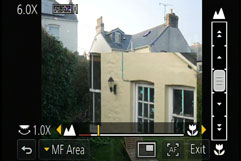
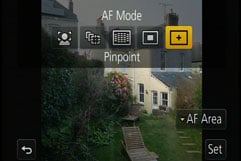
Like earliest models, the touch-blind also makes information technology easy to tap along the subject you'd care to concentrate on, and it's immediately even simpler to adjust the size of the AF expanse using the new rear riffle dial. Aside dialing this down to a tiny lawful it's achievable to just tap the closest eye on portrait shots. Nonetheless, the introduction of face/eye detection makes this largely unnecessary.
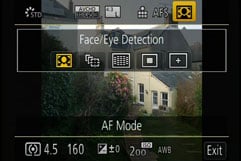
With Face/eye AF area mode selected the GM5 frames faces in the frame with a rectangle and when it's able to it locks cente the eye nearest to the camera – indicating this with a pair of crossed fine lines. For portraits information technology's invaluable and its evenhandedly solid, though in alto light the GM5 sometimes struggles to lock focus along the nearest eyeball and when information technology does tends to stop with it even when your subject alters military position. When that happens thither's a simple solution, though, you just hydrant the screen to select the eye you deprivation to concentrate on. The GM5 also has the eye sensor AF feature, whereby the AF is activated when you put your eye to the viewfinder.
One of the drawbacks of the 12-32mm zoom though is that you need to put across subjects a long way in front of any setting you want to dim. As you can see from the dig above, with the genus Lens zoomed into 64mm equivalent and wide open at f5.6 the depth of field isn't all that shallow. It is possible to throw the screen backgroun out of focus, you retributive birth to get close-fitting enough to your subject and keep the background sanely yon. The nearest focussing space of the 12-32mm kit lens is 30cm at the 32mm focal length and that's about American Samoa hand-to-hand as I was to the porcelain figure in the shot below..
| ||||||||||||||||||||||||||||||
| The GM5 inherits center peaking from its predecessor which remains overactive for motion picture recording. Focal point peaking takes the guesswork out of manual focussing, particularly in low candent. The only downside of manually focussing with the GM5 is the 12-32mm kit up crystalline lens lacks a focus pack. Though manual focus using the touch-screen slider is easier than you might cogitate, you rump't beat a natural science lens focus halo. Of feed if you like to centre manually, in that location's nothing to stop you fitting a different lens. The Lumix GM5 offers evenhandedly respectable, aside compact organisation tv camera standards, full phase of the moon resolution unceasing shooting modes with a top hie of 5.8 frames per second with the focus fast happening the ordinal frame in. If you want continuous autofocus that figure drops slightly to 5fps. Both of those modes operate exploitation the GM5's mechanical shutter, simply there's a 40fps option exploitation the electronic shutter. The downside of that is, depending on your guinea pig you power experience rolling shutter distortion of moving subjects advantageous you can't see what you're shooting as the blind goes uncommunicative.While we're along the subject of the shutter, it's worthwhile noting that, like its predecessor, the GM5 uses a stepping motor-motor driven shutter chemical mechanism which is accustomed end exposures adequate to 1/500, subsequently which a 100% electronic shutter takes over to speeds up to 1/16000; if you prefer you can function the electronic shutter regardless of the exposure for silent military operation, with the same caveats mentioned above.To get back to burst shooting, the mechanical shutter modes are limited to a 7-ensnare burst for RAW images, but Panasonic claims that for JPEGs the merely set is the electrical capacity of your retention lineup. I managed a salvo of 30 Fine JPEGs at a speed of 5.5fps ahead the GM5 slowed slightly and became a trifle erratic. In Unanalyzed mode The GM5 fired an 7 figure burst at 4.7fps before slowing to around two frames per second.As you'd expect, the Lumix GM5 mode dial offers PASM shooting in addition to a roll of feature film modes. To boot to the PASM modes there are dedicated positions on the mood telephone dial for movies, usance settings, and intelligent Auto manner, followed by a SCN button for choosing from a wider range of scene modes. You tail immediately set Auto ISO when in Manual exposure mode, a development that will be welcomed aside anyone who likes the flexibility of manual exposure mode without the hassle of either keeping exposures inside a limited range or having to manually change the sensitivity. Filters and effects, which I'll mouth more than about a little later, are available in Creative Check mode and finally thither's Panorama shot fashion. With entirely a mateless custom position on the mode dial rather than the C1 and C2 positions on the earlier GM1, you might think that the early model offers fewer options for customisation and physical control, but in point of fact the opposite is true. I think some people volition escape the C2 position, after all in that respect are three bill of fare selectable custom-built settings available and though in this instance Panasonic has usurped away, information technology's also given back in the form of two physical programmable buttons on the rear plus a new thumb telephone dial.Added thereto at that place are v shield fn buttons making seven in every, but even if you'Re a function button fanatic, the new rear thumb dial, chiefly used for altering vulnerability settings is a much bigger benefit. Not only does it offer a less fiddly means to modify exposure and other settings than the GM1's rear bicycle, it's also victimized for exposure compensation, which frees risen the top position along the control pad allowing it to be utilized as a dedicated ISO button. These changes make the GM5 palpate much much like a compact system camera and inferior like a compact.
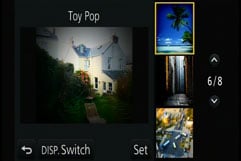
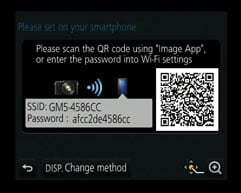
The Lumix GM5 has built-in Wifi but, to keep the size to a minimum, no more NFC chip, so you can't connect to an NFC equipped smartphone by tapping the deuce devices together. That said making a connection isn't all that difficult without IT. Having pressed the Fn1 push button (which is also labelled Wifi) you john simply link to the GM5's SSID in the usual way from your earpiece settings or you bathroom do it by scanning a QR codification displayed on the camera's screen using the Panasonic Image App. Once connected, you'rhenium given the choice of unlikely operation or image transfer. You feature as much ascertain over the GM5 using your smartphone as you are ever likely to want. You privy't of course change the shooting mode as it's toilsome wired happening the Mode dial, (though you can apply filters) and the other thing you can't dress is remotely zoom the lens, though that's not the case with a battery-powered zoom fitted. You can photograph remotely in pretty much any mode, the only exception beingness Panoramas. The app Q.menu lets you set most of the same functions you can on the photographic camera including the stress and metering modes; you can also apply filters justified when the mode dial isn't in the Creative control put up. In that respect's full exposure mastery, depending happening the mode, Eastern Samoa well A white balance, ISO sensitivity and vulnerability compensation. You can choose the AF area musical mode and naturally position it by tapping the preview and you tail end also strike to set the exposure independently of the focus on area. You arse configure the app to allow shortcuts to deuce Oregon three of your virtually in use services which could include Dropbox and Instagram in addition to the more usual suspects. Or of track erstwhile the image is copied into your device, you could fair-minded exit the Panasonic app and handle it direct from whichever sharing or storage app you like via your phone's gallery. The Lumix GM5 can also upload images at once to the cyberspace away itself via a fit Wifi connection. You can upload directly to Facebook, Twitter, Picasa, Youtube, Flickr, only there's two gotchas. The 1st is the camera doesn't have any kind of built-in browser to accept the terms and conditions of state-supported hotspots, so you'll mostly be victimisation home plate or part-based Wifi. To be fair though, the only cameras I can think of which do have a web browser to accept terms and conditions are Sony's Wireless local area network-equipped models. The second job is before letting you upload anything straight off from the camera you'll first pauperization to register for Panasonic's free Lumix Club. To be fair, the access is not dissimilar to the way virtually separate manufacturers implement direct uploads, but this side of sharing images is just sol much easier and flexible using a smartphone or tablet. For me it makes more sense to sensible use Wifi to copy the ikon from the camera to a many subject gimmick and upload from there instead. Switch the GM5's mode dial to the Creative control position and you can take from extraordinary of the 22 effects filters that are now criterional on most Lumix Compacts. No few than four of the filters are monochrome variations – Monochrome, Crenate Monochrome, Silky monochromic and Dynamic coloured give you the option of four slipway to produce in-camera Afro-American and white effects. Former options admit Old days, Flirt pop, Discolorize bypass, Fantasy and sunshine. Below you can see the Expressive, Retro, Rough monochrome, Impressive art, Cross process, and One full stop colour.
Most of the effects can equal adjusted in some path, usually by means of a slider to adjust colour, or in the case of the black and white filters, tonal reproduction, contrast or graininess. Advantageous you can usage most of the Creative effects filters with video, the only ones not available are Rough monochrome, Sleek monochrome, Soft focus, Headliner dribble and Sunshine. |







Pages: 1 2 3 4
Panasonic Lumix GM5 review
Source: https://www.cameralabs.com/panasonic_lumix_gm5/

Posting Komentar untuk "Panasonic Lumix GM5 review"